
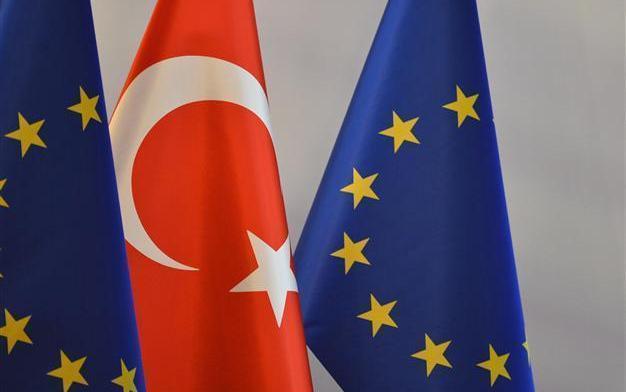
 Turkey’s new EU strategy, which is ostensibly designed to accelerate the EU accession process, was published in the Official Gazette on Sept. 25, featuring pledges to coordinate all related governmental efforts with the EU Ministry.
 The strategy paper released by Turkey's EU Ministry on Sept. 18 outlines the accession road map as follows:
- The National
Action Plan for EU Accession will be implemented in two periods, the
first until 2015 and the second from 2015 to 2019. Determining the
concrete and priority steps required in each negotiation chapter, the
action plan consists of three parts: harmonization of primary
legislation, harmonization of secondary legislation and institution
building and others.
- Although fundamental laws and parts of
legislation have already been repealed or amended, all legislation
bearing the imprints of the military coup of Sept. 12, 1980, will be
reviewed in detail during work for a new Constitution. The new charter
will pave the way for the initiatives that Turkey needs by expanding the
scope of politics and removing the imprints of military tutelage.
-
Although the relevant screening reports have not been conveyed to
Turkey, the country will continue a comprehensive reform agenda in all
areas covered by the political criteria and accession chapters 23 and
24, such as freedom of expression, institutionalization in the field of
human rights, border management, organized crime and the management of
migration.
- The work of the Reform Monitoring Group (RMG) and the
Political Affairs Subcommittee (SIYAK) will be intensified in the
upcoming period, for the preparation of new reform packages.
- All necessary steps will be taken for the successful conclusion of a visa liberalization process.
-
Adopting legislation is not sufficient for harmonization with the EU.
Upcoming reforms will focus not only on new legal arrangements but also
on enhancing implementation capacity.
- The National Action Plan for
EU Accession will address Turkey’s priorities in continuing and
enhancing socioeconomic change and identify legislation to be
harmonized, in addition to areas of action for improving administrative
structures in proper implementation.
- The communication strategy has
two dimensions. The first is directed at communication at home, aiming
to solidify the domestic perception of the EU process as a modernization
project that improves the living standards of Turks. Such a perception
will ensure support by all segments of society for the adoption and
proper implementation of the reforms.
The second dimension of the
strategy addresses the international community, aiming to showcase facts
and remold a correct perception of Turkey within the EU’s public
opinion. This dimension will help establish trust regarding Turkey’s
commitment and self-confidence in the EU process.


