Pope calls to intensify dialogue with Islam
VATICAN CITY / ISTANBUL

AP photo
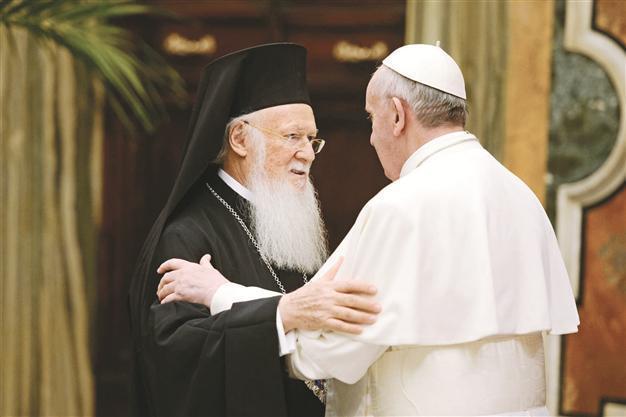
Pope Francis called for the Roman Catholic Church to “intensify” its
dialogue with Islam on March 22, echoing hopes in the Muslim world for
better ties with the Vatican amid news that Greek Orthodox Patriarch
Bartholomew invited the pontiff to come and visit the patriarchate in
Istanbul during his own recent visit to the Vatican.
“It is
important to intensify dialogue among the various religions, and I am
thinking particularly of dialogue with Islam,” the new pontiff said in
an address to foreign ambassadors at the Vatican.
Francis’
predecessor, Benedict XVI, was seen by some Muslim leaders as hostile to
Islam and the change at the top had been welcomed by the 57-member
Organization of Islamic Cooperation (OIC) and Al-Azhar, Sunni Islam’s
highest seat of learning.
Ekmeleddin İhsanoğlu, head of the
Saudi-based OIC, said earlier this month that he hoped “the relationship
between Islam and Christianity will regain its cordiality and sincere
friendship.”
Al-Azhar broke off ties in 2011 after Benedict called
for the protection of Christian minorities following a suicide bombing
at a church in Egypt.
Benedict was also heavily criticized early
in his reign when he recounted a Byzantine emperor’s description of the
Muslim Prophet Muhammad as a warmonger who spread evil teachings.
“We
believe Pope Francis will serve Christians and all humanity. We have
invited him to our patriarchate. As you know, the last three popes
formally visited our patriarchate. We can work together toward the unity
of Christians,” Bartholomew told reporters in Istanbul.
The patriarch said the potential visit by Pope Francis to Turkey would require an official invitation from the president.
“The
pope said he would like to come to Turkey. Our president has to invite
him and I am sure that he will do this,” Bartholomew said.
Bartholomew
also said his recent visit to Rome had gone very well and that he felt
they had ushered in a new era of cooperation with the new pontiff.
In
his address on March 22, Francis also called for the church to engage
in more dialogue with non-believers, returning to an effort begun during
Benedict’s reign amid rising secularism in the Western world.
“It
is also important to intensify outreach to non-believers so that the
differences which divide and hurt us may never prevail but rather the
desire to build true links of friendship,” he said.
The Argentine
pope said he wanted to “build bridges connecting all people” and said
this was particularly significant for him personally because of his own
Italian immigrant roots.
“This dialogue between places and cultures a great distance apart matters greatly to me,” he said.
Francis
referred to it as a “dialogue between one end of the world and the
other, which today are growing ever closer, more interdependent.”
The
76-year-old pope, who was elected last week, named himself after St.
Francis of Assisi, a medieval Italian saint who shunned riches to live a
life of poverty, and he said he wanted the church to struggle against
poverty in all its forms.
Francis also said he wanted to begin a
“journey” with countries that do not yet have diplomatic relations with
the Vatican. Benedict had made improving relations with China a
priority, given the millions of faithful who belong to China’s
underground Catholic Church, but tensions remain, particularly over the
appointment of bishops. China insists on naming them, while the Vatican
says only the pope can name bishops.
China congratulated Francis
on his election but said establishing formal relations would depend on
the Vatican cutting diplomatic ties with Taiwan and ceasing activities
Beijing considers as interference in its internal affairs, a reference
to bishops’ appointments.
Compiled from AFP and AA stories by the Daily News staff.