Turkish ban on prisoners' voting violates human rights, says European court
ISTANBUL – Hürriyet Daily News

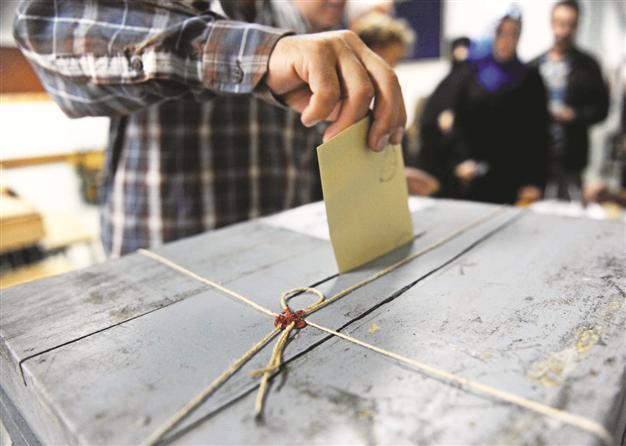
The European Court of Human Rights Söyler decided that Turkey violated the right to election as the complainant could not vote in 2007 when he was in jail. Daily News Photo
The European Court of Human Rights (ECHR) ruled on Sept. 17 that Turkey
had violated the right to free elections and defined the automatic and
indiscriminate ban on prisoners’ voting rights in Turkey to be “too
harsh.”
In the case opened by Turkish businessman Ahmet Atahür
Söyler, the ECHR decided that Turkey had breached Article 3 of Protocol
No. 1 of the European Convention on Human Rights, which deals with the
right to free elections, and that the ban on convicted prisoners’ voting
rights was “harsher and more far-reaching than any the Court has had to
consider in previous cases.”
Söyler was convicted in 2007 of
drawing cheques without having sufficient funds in his bank account, and
was sentenced to a term of imprisonment of nearly five years. Söyler
could not vote during the general elections held in July 2007, as
Turkish law does not allow persons convicted of having intentionally
committed an offence to vote while serving their sentences. He was also
unable to vote in the general elections of 2011, even though he was
released on probation.
The ECHR decided that the Turkish law on
prisoners’ voting rights was too harsh as it did not take into account
the nature of the offence and was indiscriminate.
“The Court
found in particular that the ban on convicted prisoners’ voting rights
in Turkey was automatic and indiscriminate and did not take into account
the nature or gravity of the offence, the length of the prison sentence
or the prisoner’s individual conduct or circumstances. The application
of such a harsh measure on a vitally important Convention right had to
be seen as falling outside of any acceptable room for maneuver of a
state to decide on such matters as the electoral rights of convicted
prisoners,” read the ECHR judgment, released on Sept. 17.
Söyler
did not receive any compensation, as the ECHR ruled that the
acknowledgement of the violation of his right to free election was a
sufficient compensation for his non-pecuniary damage.