1 Comment
PRINTER FRIENDLY
ECONOMIC REVIEW |
• INTERNATIONAL |
Tuesday, February 09 2010 20:58 GMT+2
Your time is
|
Renowned economist warns of ‘mother of all bubbles’
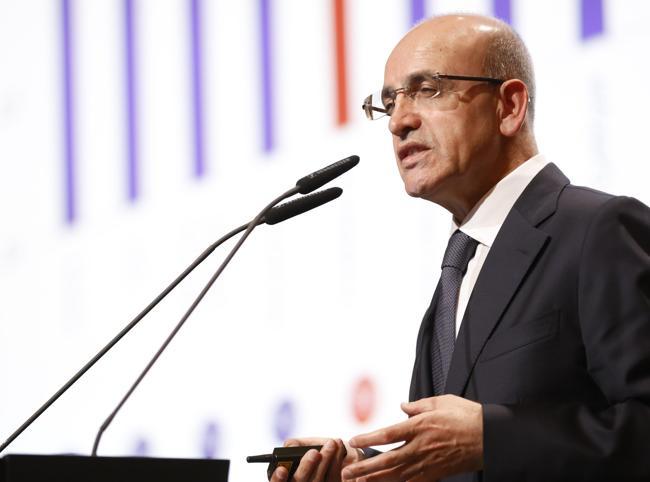
Professor Nouriel Roubini says policy makers must take action on assets soon or risk a huge crunch. AFP photo
|
Recent rallies seen in equity and commodity prices are only in part due to improving macroeconomic fundamentals, warned Professor Nouriel Roubini in a column published on Sunday by the Financial Times.
According to Roubini, dubbed “Dr. Doom” for foreseeing the global financial crisis as early as 2006, “shorting a weak dollar in carry trades” has driven highly leveraged investments in all asset classes, creating a new – and potentially more dangerous – bubble.
“The longer and bigger the carry trades and the larger the asset bubble, the bigger the ensuing asset bubble crash,” Roubini said. “One day this bubble will burst, leading to the biggest coordinated asset bust ever.”
Given the near-zero interest rates in developed economies, shorting the U.S. dollar has led to “borrowing at a real interest rate of negative 10 to 20 percent annualized,” he said, adding the abundance of liquidity caused by “massive purchases of long-term debt instruments” and “massive government purchasing of assets such as the U.S. government’s $1.8 trillion purchase of Treasuries, mortgage-backed securities and agency debt.” Thus, the current rise in asset prices owes much to “excess liquidity and a massive carry trade,” he said.
“Every investor who plays this risky game looks like a genius – even if they are just riding a huge bubble financed by a large negative cost of borrowing – as the total returns have been in the 50-70 percent range since March,” said Roubini.
The New York University professor also warned about several factors that will precipitate “an eventual burst in the current carry trade bubble.”
“First, the dollar cannot fall forever and must eventually stabilize, at which point all investments backed by short-dollar funds will immediately plunge,” he said. “Second, volatility is bound to rise when government intervention stops, as the $1.8 trillion purchase plan is due to conclude next spring. Third, if the U.S. economy’s fundamentals start to see real growth in the third and fourth quarters, it is likely that the Federal Reserve will tighten interest rates earlier than expected. The fear of risk at this point would then cause a flight to dollar investment and a subsequent dollar rally.”
This fear would result in “a stampede,” he said in the Financial Times piece, as “closing long-leveraged risky asset positions across all asset classes funded by dollar shorts triggers a coordinated collapse of all those risky assets – equities, commodities, emerging markets asset classes and credit instruments.”
Roubini said if policy makers “do not change course soon,” such a collapse would have disastrous effects. “The longer they remain blind, the harder the markets will fall,” Roubini said.
READER COMMENTS
Guest - YİGİT (2010-01-30 13:43:59) :
- MOST POPULAR
- MOST COMMENTED
- Armenian 'genocide' bill to test US-Turkish ties again
- Greek crisis may be chance to improve relations
- Turkey to take new steps to reduce tanker traffic through straits
- Lieberman criticizes Turkey's 'anti-Israeli' stance
- Black and white photos offer glimpse of Bodrum's history
- Alevi workshop in Turkey ends in dispute
- Nordic investor confident on Turkish stocks
- Council of Europe head praises Turkey's global role
- Conclusion-driven foreign policy
- Three die in floods in Turkey's Mediterranean region
- Armenian 'genocide' bill to test US-Turkish ties again
- Turkish man accused of burying daughter alive faces life
- Greek crisis may be chance to improve relations
- How to save Greece?
- US, Switzerland cool to Turkish quest for assurance on Armenia ties
- The Diyanet and laïcité: new Turkish exports to Europe
- Lieberman criticizes Turkey's 'anti-Israeli' stance
- Cigarette consumption reduced in time for boycott day
- Prison sentences demanded for ‘murderer’ slogan
- Turkish ship runs aground in Adriatic Sea

WRITE A COMMENT